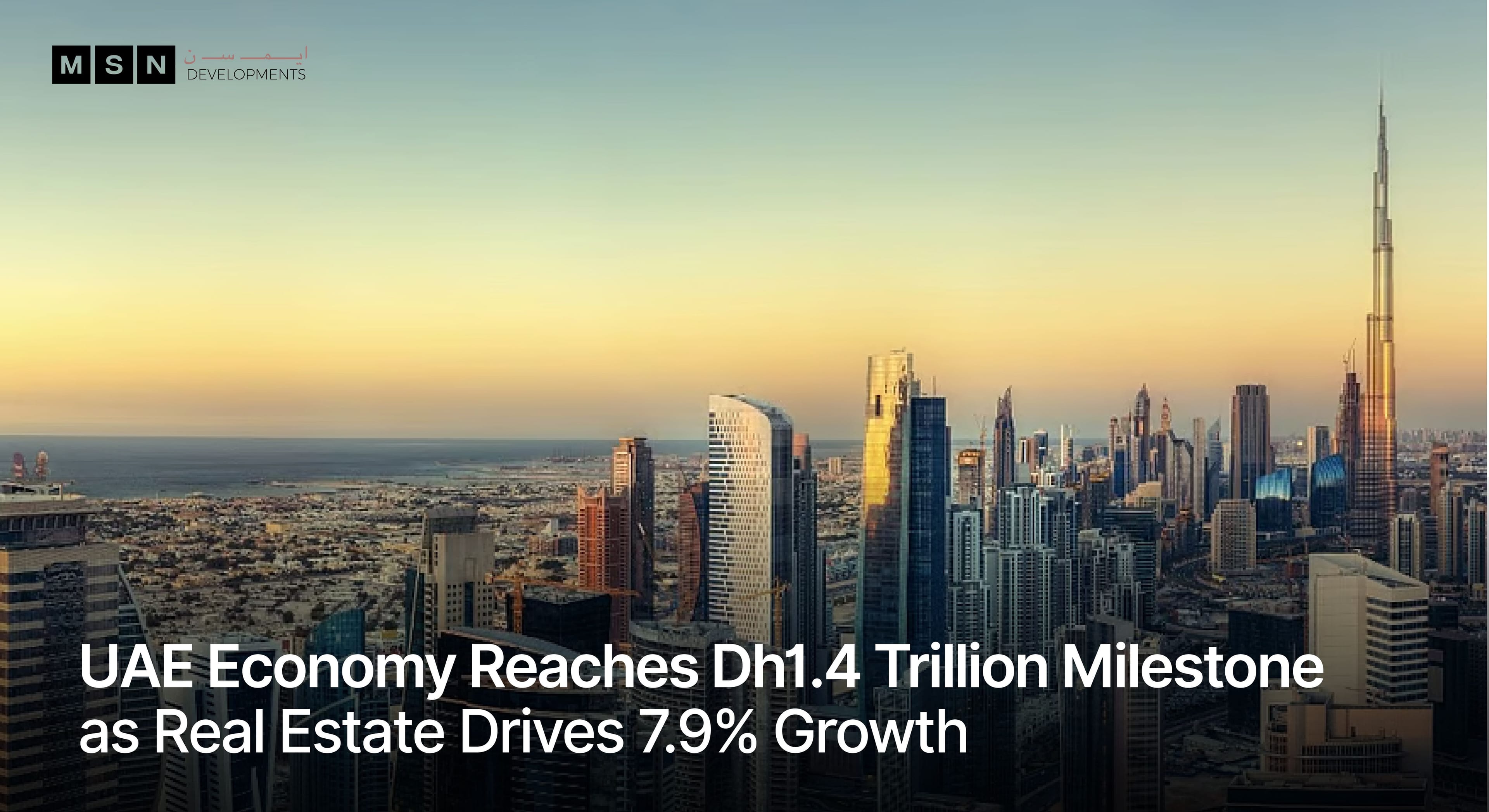
UAE Economy Reaches Dh1.4 Trillion Milestone as Real Estate Drives 7.9% Growth
The UAE economy reaches Dh1.4 trillion, driven by 7.9% growth in the real estate sector, reinforcing Dubai’s position as a global investment hub.
The UAE economy recorded a strong performance during the first nine months of 2025, with gross domestic product reaching approximately Dh1.4 trillion and expanding 5.1% year-on-year, according to data released by the Federal Competitiveness and Statistics Centre.
The economic expansion was driven primarily by non-oil sectors, which grew 6.1% to exceed Dh1 trillion, reinforcing the country's successful economic diversification strategy aligned with the We the UAE 2031 national vision.
Real estate emerged as a key growth engine, posting a robust 7.9% increase during the period. The sector's strong performance reflects sustained demand in both residential and commercial property markets, supported by inflows of foreign investment and infrastructure development across the Emirates.
Financial and insurance activities recorded the highest sectoral growth at 9%, followed by construction at 8.7% and manufacturing at 6.9%. Wholesale and retail trade remained the largest contributor to non-oil output, accounting for 16.1% of the non-oil economy.
Minister of Economy and Tourism Abdulla bin Touq Al Marri noted that the results demonstrate the effectiveness of long-term diversification policies. He emphasised that the growth was driven by the country's transition toward a knowledge-based economy, supported by competitive legislation and an enabling business environment.
The economic momentum positions the UAE on track to achieve its ambitious goal of doubling GDP to Dh3 trillion over the next decade. The country maintained its status as a leading regional trade hub, ranking as Oman's top trading partner in non-oil exports, re-exports, and merchandise imports in 2025.
Hanan Ahli, Managing Director of the Federal Competitiveness and Statistics Centre, said the integration of advanced technologies and artificial intelligence into national statistical systems has strengthened policy effectiveness and improved long-term development planning capabilities.
Sources


